Scrapbooking Paper Usage Without Waste or Guesswork

You know the feeling, halfway through a layout you run short on the one pattern that ties the page together. Or worse you buy a full stack, use five sheets, and the rest turns into a bin of odd scraps.
Better scrapbooking paper usage comes down to matching your paper to the project. Page size, photo count, layout style and embellishments all change how much you need. Common sizes like 12x12, 8.5x11 and 6x8 each do a different job well.
Once you start planning paper with purpose, waste drops fast and your stash goes further.
Start with the project so you know how much scrapbook paper you really need
Paper use changes based on what you're making. A single 12x12 layout usually needs less paper than a double-page spread, but more than a card or planner insert. Mini albums are their own beast because they use smaller pieces over and over.
Start with the number of photos. One large photo often works with a simple background and a few mats. Six photos usually need more layers, more trimming, and tighter planning. Style matters too. Full-sheet patterned backgrounds use paper quickly. Accent-based pages use much less.
Here's a quick reference point:
| Project type | Typical paper need |
|---|---|
| Single 12x12 layout | 2 to 4 sheets |
| Double-page spread | 4 to 7 sheets |
| Mini album spread set | 6+ sheets, often mixed sizes |
| Cards or tags | 1 to 2 sheets can make several |
That's not a rulebook. It's a starting line.
The paper size you choose changes everything
For full scrapbook layouts 12x12 is still the workhorse. It gives you full page backgrounds with no piecing and plenty of room for photos, titles and journaling.
Smaller sizes stretch your supplies better. An 8.5x11 sheet works well for photo mats, layered panels and journal blocks. Meanwhile, 6x8 pads are great for accents not usually for base pages. If you treat small pads as detail paper instead of background paper they last much longer.
That's why many scrapbookers mix sizes on purpose. Use 12x12 cardstock or a neutral print for the base, then bring in smaller patterned sheets for color and contrast.
A simple way to estimate sheets before you cut
A beginner friendly method works well because it keeps you from overthinking. Start with one sheet for the background then add one or two sheets for mats, blocks and layers. After that keep one extra sheet for mistakes or optional details.
If your layout is clean and photo heavy, three sheets may be enough. If it's layered, mixed, and full of embellishments, plan for four or five.
If you want fewer leftover scraps, estimate the page first, then shop the stash second.
For repeated cuts a paper cutting calculator for cardstock and patterned paper can help you map pieces before trimming. If you want a quicker project specific estimate this scrapbooking paper usage calculator gives you a solid starting point.
Use more of every sheet with smarter layout choices
Good design doesn't have to eat paper. In fact some of the best scrapbook pages use less paper because they leave room to breathe.
Instead of thinking in full sheets, think in zones. A photo cluster, a title area and a journal spot can create a finished page without covering every inch. That shift alone can cut your paper use fast.
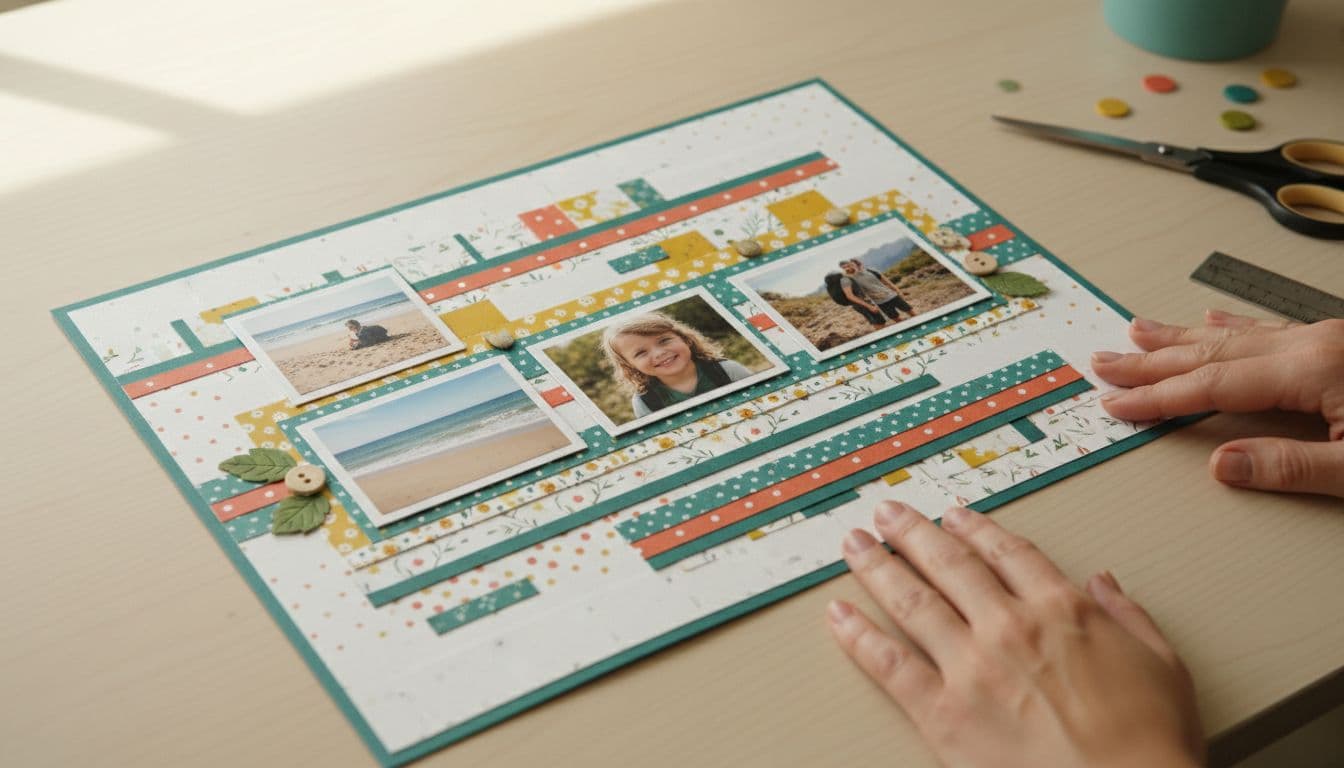
Use strips, blocks and photo mats instead of full sheet coverage
A full patterned background looks nice but it burns through paper fast. Strips, corner pieces, frames and layered blocks give you the same visual energy with less waste.
For example three 2-inch strips across a cardstock base can feel just as complete as a full patterned sheet. Photo mats do a lot of work too. A few stacked mats create depth, use smaller cuts and let you feature favorite papers without sacrificing an entire page.
Small paper pads shine here. A 6x8 print may be too small for a base but it's perfect for a title block, a banner or a photo frame. If you make cards too a cards per sheet calculator can help you see how much you can get from one sheet before you start cutting.
Save your scraps in a way that makes them easy to use later
Scraps only save money if you can find them. Toss them in one pile, and they become confetti with emotional baggage.
Instead, sort scraps by size or purpose. Keep strips together, rectangles together and tag-sized pieces in their own bin. You can also sort by color if that fits how you design. Most importantly, set a minimum scrap size.
A 2x2-inch rule works well for many scrapbookers. Anything smaller usually becomes clutter.
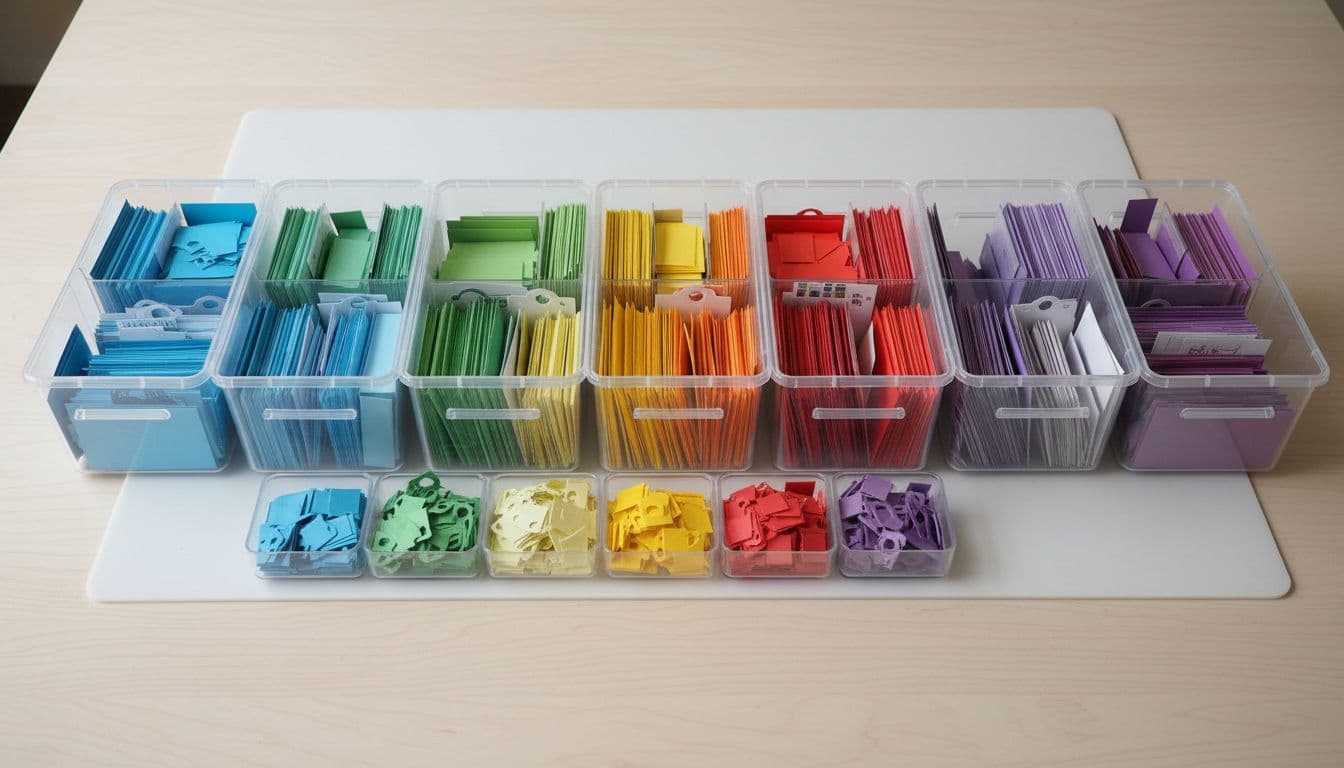
Those saved pieces can become card fronts, tags, notebook covers, tabs or journaling accents. So instead of treating scraps like leftovers, treat them like a second paper collection.
Avoid common paper waste mistakes and make your supplies last longer
Most paper waste happens before the glue comes out. Overbuying, cutting too soon, and storing paper badly all chip away at your stash.
Buying with no page plan is a common trap. Patterned paper is easy to love in the store, but harder to use at home.
Then there's panic cutting, trimming into favorite prints before you know where they belong. Storage problems add to the mess. If paper is hidden in piles you'll forget what you own and buy duplicates.
Plan the page before cutting into your favorite patterns
A quick layout map saves paper. Lay out your photos first. Then place whole sheets underneath them before making a single cut. Even a rough sketch on scrap paper helps.
This step protects your best prints. It also stops that painful moment when the perfect floral gets chopped into a tiny strip that disappears behind a photo.
If you batch-cut pieces for albums or cards a custom paper cut calculator can help you use standard sheets more efficiently.
Choose storage and supplies that protect your paper investment
Store paper vertically in holders, trays or crop boxes so you can see it at a glance. Flat stacks look neat at first, but they hide patterns and slow you down. When paper is visible, it gets used.
Also, choose acid-free, archival-safe adhesive for memory keeping. Photos and keepsakes deserve materials that won't yellow, crack, or damage the page over time. Good storage and the right supplies help your paper last longer, both in the craft room and in the album.
A better system beats buying more paper
Smart scrapbooking paper usage isn't about squeezing every inch from a sheet. It's about using the right size, planning the page first, and choosing designs that look full without wasting paper.
If your stash feels bigger than your progress, don't buy more yet. Build a better system for using what you already have, and your next layout will feel a lot lighter, cleaner, and easier to finish.











0 Comments